The Beijing Project

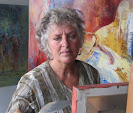
During the month of May I, Toos van Holstein, am artist in residence in the NY Arts Gallery Beijing in China. In this time I want to create in one of the big spaces of the gallery an exhibition of oil paintings of my hand. But as a part of the exhibition I also want to cooperate with several Chinese artists in creating a symbiosis between the Chinese modern art and the Western modern art. For this I have available 8 banners of 6 meter length on which already parts of paintings of mine have been printed. On these banners I want to work with the other artists in changing them in new art works that will hang down from the high ceiling in the gallery space.

About me

woensdag 21 mei 2008


Today was Great Wall day. Because when you are in Beijing, you of course have to go there. Thirteen years ago we had already brought a visit but then to the Badaling area, that part of the wall you always see on pictures and where most of the tourists go to. So we thought it more interesting to visit two other parts, Simatái and Jinshanling, lying not too far from each other. It was a drive of about 120 km bur it was worth it.
But first we had to leave Beijing of course. Thirteen years ago it was a real eye opener to watch the traffic jam of 4 km with almost all new cars into the direction of the centre. So it was not really remarkable to see this jam again this morning, it was only much longer now. The real surprise was the traffic jam out of town. But this is just a remark aside.

I can now understand why most of the tourist buses are going to Badaling. This is much more accessible by foot, for the two other destinations you have to climb a lot. It’s possible to restrict this with the aid of a kind of chair-lift and a mini-train, but nevertheless climbing is necessary. Simatái was beautiful, Jinshanling impressive! It may be that the wall no too long ago has been restored and may be it’s probably not always done in a historically justified way, it remains a unique experience to walk on this Great Wall. At Jinshanling it was lovely quiet, just a few tourists around sometimes. This gave a very special feeling, just being alone on this magnificent treasure from times long gone in all peace and silence. Wonderful! I hope the pictures represent some of this feeling.


dinsdag 20 mei 2008


To make it easy you have the MoMA in New York, the IMMA in Dublin, the Mukha in Antwerp, the MAMAC in Nice and the NAMOC in Beijing. The insiders of course know now that I’m talking about museums for modern art. And of course they like to use this secret language to show they are special people with a knowledge of the world.
So today we were at the NAMOC, The National Art Museum of China. We thought this would be fun and fun it was! But what did we see there? Well, it was like being in Europe: Caspar Friedrich, the great romantic German painter from the first half of the 19th century, Emil Nolde as a representative of the German Expressionism from the first half of the 20th century, Gerhard Richter as an exponent of the modern German art and a lot of other Germans. All these exhibitions were of course organised in connection with the Olympics because all in Beijing is organised in connection with the Olympics. And if this is not the case always a phrase is invented to do so.
I thought it interesting to show a picture of just a small painting by Friedrich that without any foreknowledge could have passed like a Chinese artwork. More romantic it cannot be: two men discussing the moon.
The solo exhibition of Richter was really impressing. Especially his big abstract paintings (see picture) had a lot of impact. I really would like to know how he makes them, how he paints layer after layer and what kinds of technical tricks he uses. Those who know my work probably will understand why this intrigues me.
The fact that I can show pictures of these exhibitions means that making photo’s in the museum wasn’t a problem at all, this in contradiction with the situation in the Western world.
On the outside of the NAMOC there was indeed a sign that said it was prohibited but inside the building no one said anything about it. Some paintings even were put on the memory card in the smallest details. May be to do something with it at home? Al last this is China!

Because we were in the neighbourhood we went after our visit to the back of the Forbidden City. Here lies, as an extremist sign in the flat Beijing, a park with a high hill. But it is an artificial one, originating from the mud that was put there when the big moat around the Forbidden City was excavated. From the top you are supposed to have a beautiful view over the roofs of the imperial quarters. Well, just have a look at the two pictures made here on a normal Beijing day without any special weather circumstances. Isn’t it wise of those athletes who cancelled already their participation in the Olympic marathon?


maandag 19 mei 2008


Until now I have been visiting quite a lot of artist studios here in our art village or outside of it (see again the many pictures). It’s a pity that often the language causes a big problem in talking to each other about the art, how they earn their money and how they live. But sometimes someone speaks some English and it also happens that suddenly an English speaking person pops up, probably informed by the cell phone. In that case you can really learn more about their live. Because all the artists I met till now are very friendly, hospitable and willing to give answers to a curious member of the art club.

So I learned in the domain of finances that the yearly rent for the huge studios in the village is about € 5000. Well, that means now! Because in the last few years it rose nearly by a factor two. If in the centre you have to pay € 500 to € 1000 for a modest apartment this of course is not too much when you take into account that these studios are big enough to live in comfortably. But in my eyes it’s still a lot of money in China although it seems that a lot of artists can afford it and still have enough money left to buy a big car. Of course a number of them has a second job for living but of some I know they have a contract with a gallery. It seems this is more common here than in Holland. Sometimes it’s a very strict contract and they are not allowed to have other selling points, sometimes they just have to deliver a certain number of paintings a year and can do with the rest what they like.

May be the cars are explained by the fact that in China you don’t have to pay tax for art, that bills are not really necessary and that there are already a lot of very rich Chinese collectors who by art by the dozens out of status considerations and then of course not go for the small ones but only for the very big. I wonder what would happen if the government makes a new law in which tax for art is introduced. Or do they like to keep the situation like it is now with a lot of usually more liberal thinking artists, working satisfied in their art enclaves? An intriguing question!


zondag 18 mei 2008


Today I took a day off. So now weblog.

Till tomorrow!

zaterdag 17 mei 2008


In Europe we have the Gorge du Verdon but then of course the Americans have their Grand Canyon which is much deeper and wider. Do we have a desert in Spain, then the Americans have of course their much bigger desert in Nevada. Do we still have some old and big trees left, then in California there are the much older and taller sequoia’s. It cannot be helped, in America it’s often bigger, higher and deeper. However, without any doubt they can say in China that they have the biggest culture market.
This morning we visited the Panjiayuan market, indeed a huge where each day a few thousand merchants offer an unbelievable variety of curiosities to about 50.000 visitors. Art, well, should it always be called like that? Antiques, well, keep your eyes wide open. Real silver, be very careful. But it is an experience not to be missed! It was really interesting to see the many stalls with communist memorabilia from the time of Mao: posters, photo’s, old newspapers, everything out of this time seems worthwhile to collect nowadays. The Great Leader himself was never far away. Somewhere we saw a big poster of him, consisting out of three pieces, rolled out on the filthy floor for a customer and held down by a considerable number of his Red Book. In times not yet too far away this way of treatment of his image probably was not appreciated very much.
You can stroll here for hours without a dull moment, have a look at the traditional Chinese art on paper and the fakes of paintings of now world famous modern Chinese artists, the ornaments of Chinese minorities, Buddha’s in an overwhelming quantity, Tibetan furniture, tapestry, worn out hats of small children and big vases, but probably not those of the Ming dynasty. And of course you don’t pay the price they ask. But isn’t that the same all over the world on these kinds of markets?


vrijdag 16 mei 2008


Today I allowed myself a whole day off to have a look at modern Chinese art. This meant also a visit to the 798 Art District, an area we already visited about two weeks ago for a much too short time. Some books say this was the area for ammunition factories, others state that it was for the development and manufacturing of electronics. Whatever it may be, in the fifties the old DDR helped the Peoples Republic of China to build up this complex where at its peak about 20.000 people were working. But modern developments diminished the value of the complex and its decline set in.
After some time professors and students discovered the area and the big halls as an ideal settlement for their studios. This gave a new impulse to the complex but in 2004 the situation became very unsure because the government developed ideas for the building of apartments there. But in some way or another they were pursued to let fall this idea, may be because at that time Chinese art was already booming in the Western world. So the new idea of making it an art district as never seen before got shape. Now the development accelerates as seems only possible in China. Many hundreds, may be even thousands of cheap workers are busy with new pavements everywhere, with planting trees and lot of flowers and with renovating the many big halls that are still there, even after the huge number of galleries that are already settled here. In August, when the Olympics start, the tourist will walk through an art district no one has ever seen before, a propaganda place for Chinese art and fashion of which all other countries can be jealous.
I found it fascinating to see the many young Chinese people strolling around. Here you get a glimpse of the new, modern China. Of course I tried again to illustrate this with a large number of pictures of the huge exhibition spaces, the mess in the streets at the moment and the kind of art that is shown.