The Beijing Project

During the month of May I, Toos van Holstein, am artist in residence in the NY Arts Gallery Beijing in China. In this time I want to create in one of the big spaces of the gallery an exhibition of oil paintings of my hand. But as a part of the exhibition I also want to cooperate with several Chinese artists in creating a symbiosis between the Chinese modern art and the Western modern art. For this I have available 8 banners of 6 meter length on which already parts of paintings of mine have been printed. On these banners I want to work with the other artists in changing them in new art works that will hang down from the high ceiling in the gallery space.

About me

woensdag 28 mei 2008


Just when you think that you have seen a lot of art, a lot of studios and have met a lot of interesting artists you bring a visit to SongZhuang and you get the feeling that you can start it all over again.

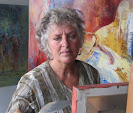
But may be it’s better to start this story with a right beginning. In The Netherlands we had already made e-mail contact with Nanfei Wang, a professional female artist in Beijing (see photos). A couple of days ago she came to view my exhibition and we made the appointment to visit her studio. When she told we had to go to SongZhuang for that a bell started to ring. Because when you know your way in the literature of modern art in Beijing you also know that this is the name of the first art village near Beijing. In 1995 some young artists from Beijing settled in this farmer village about 30 kilometres from the city. There they were driven out by the authorities to find shelter and studios in SongZhuang where they were left in peace. As often happens in places where artists find a place to work, just think about Soho in New York a long time ago, things start to happen. In combination with the less stricter politic system that was introduced somewhat later this new atmosphere in the village has lead now to a flourishing art community of about 1500 registered artist, not counting for the many unregistered ones.
Do not think it’s a cosy place, this SongZhuang, because there are no such places around Beijing. Just imagine clusters of houses and some bigger buildings intersected by farmland, small factories and roads, to far away from each other to walk. But the farmland is getting less and less because the farmers have discovered that they can earn more money by building complexes of artist studios and rent them. Because a new rule says it’s not possible anymore for non citizens to by property as was the case in the past. This place, so important in the history of modern Chinese art, we visited today.

Our guide Nanfei, who has struck root here in the community and speaks English very well, took her time to give us a tour in our cab with driver we had hired for the whole day. In this way we visited a lot of studios of art friends of hers, we had overwhelming welcomes everywhere, our lunch was secretly paid for by a friend of hers who sat on a table nearby, one of my visits was even filmed, my signature can now be found on a big canvas and saw of course a lot of galleries in old but renovated factories. The art itself showed again its variety in images and techniques, in authentic or stolen styles. But the last is here no problem at all.
This day went by too fast and we have only seen a very small part of what SongZhuang has to offer. But we saw again enough to conclude that the art in and around Beijing fizzes in an unbelievable way.


dinsdag 27 mei 2008


Mijn levensgezel zegt altijd “als je ’t groot maakt of veel blijkt het ineens kunst te zijn”. Zet bijvoorbeeld één lege melkfles in een grote, lege fabriekshal, dan heeft iemand die fles gewoon vergeten. Maar zet je er 5000 van die flessen neer, dan ineens is het een installatie en dus kunst, als je er ten minste nog een ingewikkeld verhaal bij vertelt over de veranderende lichtinval in de loop van de dag en de invloed die de flessen hebben op de lichtweerkaatsing, bla, bla, bla, enz.
Maak je een goed lijkend beeld van een naakte zittende baby op ware grootte, dan zal men zeggen ‘leuk’. Maar maak je het zes meter hoog en staat ’t op de Biënnale van Venetië, dan ineens is iedereen onder de indruk en is het echte kunst. Persoonlijk denk ik daarbij eerder aan het verhaal van Andersen over de kleren van de keizer, vooral gezien de naaktheid van de baby.

Deze truc werd in de Westerse moderne kunstwereld al veelvuldig toegepast, dus is ’t logisch dat we ‘m ook hier tegen komen. Het leek me wel interessant daarvan een paar uitingen te tonen. De melkfles is dan wel vervangen door een bepaald beeldje maar lekker vaak te herhalen, de baby is vervangen door een zeer vergrootte metalen cilinder van het type medicijncapsule zoals dat over de hele wereld wordt geslikt, iemand heeft een grote pannenzaak volledig leeg gekocht en weer een ander is lekker gaan kleien met héééél grote klonten klei om er andere grote klonten klei van te maken. Je kunt natuurlijk ook een paar bloederige wc-potten neerzetten met portretten van Tweede Wereldoorlog-figuren of een rotstuin installeren met grote stukken glinsterend blik, precies nagemaakt naar echte rotsblokken. De moderne kunstwereld in Peking is dus druk bezig met een installatie-inhaalslag. En ach, hier hebben ze ook keizers gehad! Logisch dus dat de Duitse kunstgoeroe Joseph Beuys aan Mao de moderne kunst moet uitleggen (laatste foto).


maandag 26 mei 2008


Being in Beijing now means you absolutely have to visit the tourist obligation number one, the OLYMPIC AREA, the place where IT all is going to happen in August. It doesn’t matter how you think about all the publicity the Olympic Games get in all its forms, a bit too much in my eyes but who am I, you cannot just pass it here. If it’s not the big displays everywhere with the seconds countdown till The Day or the huge posters of sponsors of the games, it’s the image of the five rings on all the beer bottles here and there are many beer bottles.

So yesterday, Sunday, had to be the day. We planned to have a quiet walk around, and may be over the area with the different stadiums. This was a wrong idea! What we didn’t know was that just this weekend for the first time athletic games were organised in the big stadium and that this was a great opportunity for many Chinese families to admire their own spaghetti building from the in and outside for a reasonable price. Because the price for an Olympic ticket is a bit outrageous for a normal Chinese income. So it was sold out which in itself should already have been a good reason for an extreme bustle but the parking facilities and the Olympic subway line are not yet ready. Result? Traffic chaos! But nevertheless we could have some walks along the fences that stretched away for many kilometres with also a lot of military guards.

A few kilometre north of the central stadium, the blue building for the swimming (see photo) and this spectacular skyscraper in the form of the Olympic flame another area is found with for instance the tennis (see photo) and the hockey stadiums embedded in a lot of green and parks.. Here it was remarkably quiet.
The conclusion is that costs didn’t play a role, cheap labour is still abundantly present and finding ground so near to the centre of the town has not been seen as a serious problem by the government. In this way a spectacular concentration of sports facilities has been build. But I couldn’t get the idea out of my head that the months of June and July form a very precious supply of time that is very much needed to complete the picture.


zondag 25 mei 2008


Sunday, day of the Lord! But the real reason that there is no instalment today of this weblog, lies in the fact that we just came home now, about 11pm, from a barbecue with some of our neighbours, the Georgian sculptor Aleksandre and his Chinese wife, tapestry weaver Nino in the company of Australian, Spanish/Brazilian and Korean people in which from time to time also Russian was spoken.

zaterdag 24 mei 2008


Saturday evening is clearly a free evening. That was not so difficult to notice in ‘our’ hutong because of the lively atmosphere. So we feel it really after several weeks, ‘our’hutong. If we walk around in the ‘shopping mall’ it’s a mutually reconnaissance, friendly smiles and a lot of waving hands. Therefore this hutong deserves tonight the attention with a lot of pictures and a short text.